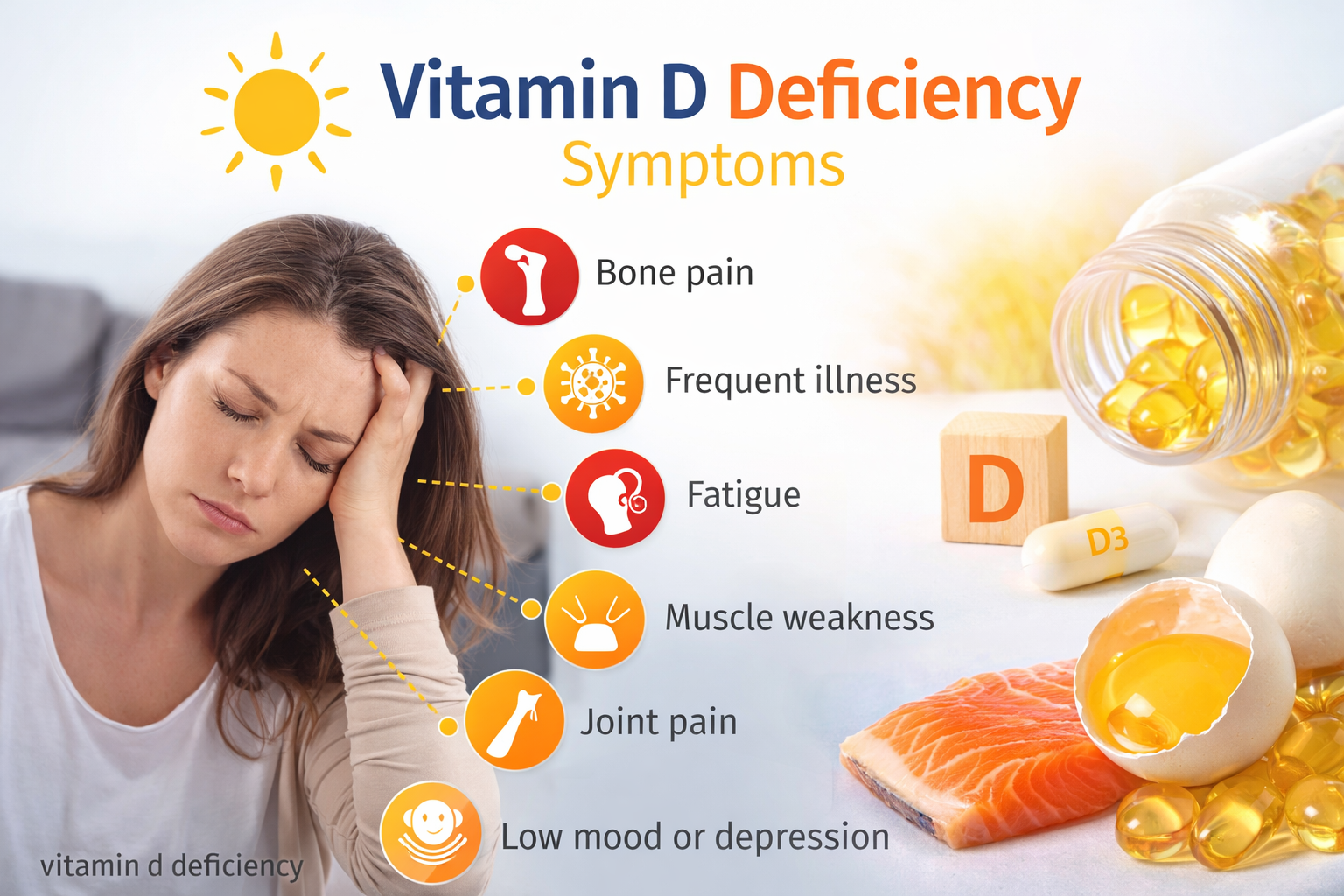
Vitamin D plays a crucial role in maintaining strong bones, healthy muscles, and a well-functioning immune system. Despite living in sunny regions, many people still suffer from vitamin D deficiency without realizing it.
This article explains the symptoms, causes, treatment options, and the best foods to prevent vitamin D deficiency naturally.
What Is Vitamin D Deficiency?
Vitamin D deficiency occurs when the body does not get enough vitamin D to support normal bodily functions. This vitamin helps the body absorb calcium, which is essential for strong bones and teeth.
Low levels of vitamin D can affect people of all ages, including children, adults, and the elderly.
Common Symptoms of Vitamin D Deficiency
Vitamin D deficiency often develops slowly, and symptoms may not be obvious at first.
Common signs include:
- Bone pain or back pain
- Frequent illness or infections
- Fatigue and tiredness
- Muscle weakness or cramps
- Joint pain
- Hair fall
- Low mood or depression
In children, severe deficiency can lead to delayed growth and bone deformities.
Causes of Vitamin D Deficiency
Several factors can contribute to low vitamin D levels.
Main causes include:
- Limited exposure to sunlight
- Spending most time indoors
- Excessive use of sunscreen
- Poor diet lacking vitamin D
- Digestive disorders affecting absorption
- Obesity
- Aging
Even people living in sunny climates can be deficient if they avoid sun exposure.
Who Is at Risk?
Some groups are more likely to develop vitamin D deficiency.
- People with darker skin
- Elderly individuals
- Pregnant women
- Breastfeeding mothers
- People with kidney or liver disorders
- Individuals following strict vegetarian or vegan diets
Regular testing is advised for high-risk individuals.
How Is Vitamin D Deficiency Diagnosed?
Vitamin D deficiency is diagnosed using a simple blood test called 25-hydroxy vitamin D test. Based on the results, doctors can determine whether levels are sufficient, insufficient, or deficient.
Treatment for Vitamin D Deficiency
Treatment depends on the severity of deficiency.
Common treatment options:
- Vitamin D supplements (daily or weekly doses)
- Increased sun exposure
- Dietary changes
Supplements should always be taken under medical guidance, as excessive vitamin D can cause side effects.
Best Foods for Vitamin D Deficiency
Although sunlight is the best source, certain foods also help increase vitamin D levels.
Vitamin D-rich foods include:
- Fatty fish (salmon, tuna, sardines)
- Egg yolks
- Fortified milk and dairy products
- Fortified cereals
- Mushrooms exposed to sunlight
Including these foods regularly can help maintain healthy levels.
How Much Sunlight Is Needed?
Spending 15–30 minutes in sunlight, 3–4 times a week, with face and arms exposed is usually sufficient for most people. Early morning or late afternoon sun is safer and more effective.
Can Vitamin D Deficiency Be Prevented?
Yes. Vitamin D deficiency can be prevented by:
- Getting regular sunlight
- Eating vitamin D-rich foods
- Taking supplements if advised by a doctor
- Staying physically active
Prevention is easier than treatment.
Vitamin D also plays an important role in maintaining the mental well-being and overall energy levels. Low vitamin D levels have been linked to mood changes, poor concentration, and reduced physical stamina. People who spend long hours indoors, work night shifts, or live in areas with limited sunlight exposure are more likely to experience deficiency. Maintaining healthy vitamin D levels supports better sleep quality, muscle strength, and long-term bone health, making it an essential nutrient for daily wellness.
Maintaining optimal vitamin D levels is important for long-term health.
According to the NHS, vitamin D helps regulate calcium levels in the body and is essential for maintaining healthy bones, teeth, and muscles.
Final Verdict
Vitamin D deficiency is common but often overlooked. Early detection and simple lifestyle changes can prevent serious health problems. If symptoms persist, it is best to consult a healthcare professional and get tested.
Disclaimer:
This article is for informational purposes only and does not substitute professional medical advice. Always consult a qualified healthcare provider.
Parents concerned about nutrition may also find our guide on healthy drinks for kids helpful for supporting overall health.
Pingback: Insulin Resistance: Symptoms, Causes & Treatment