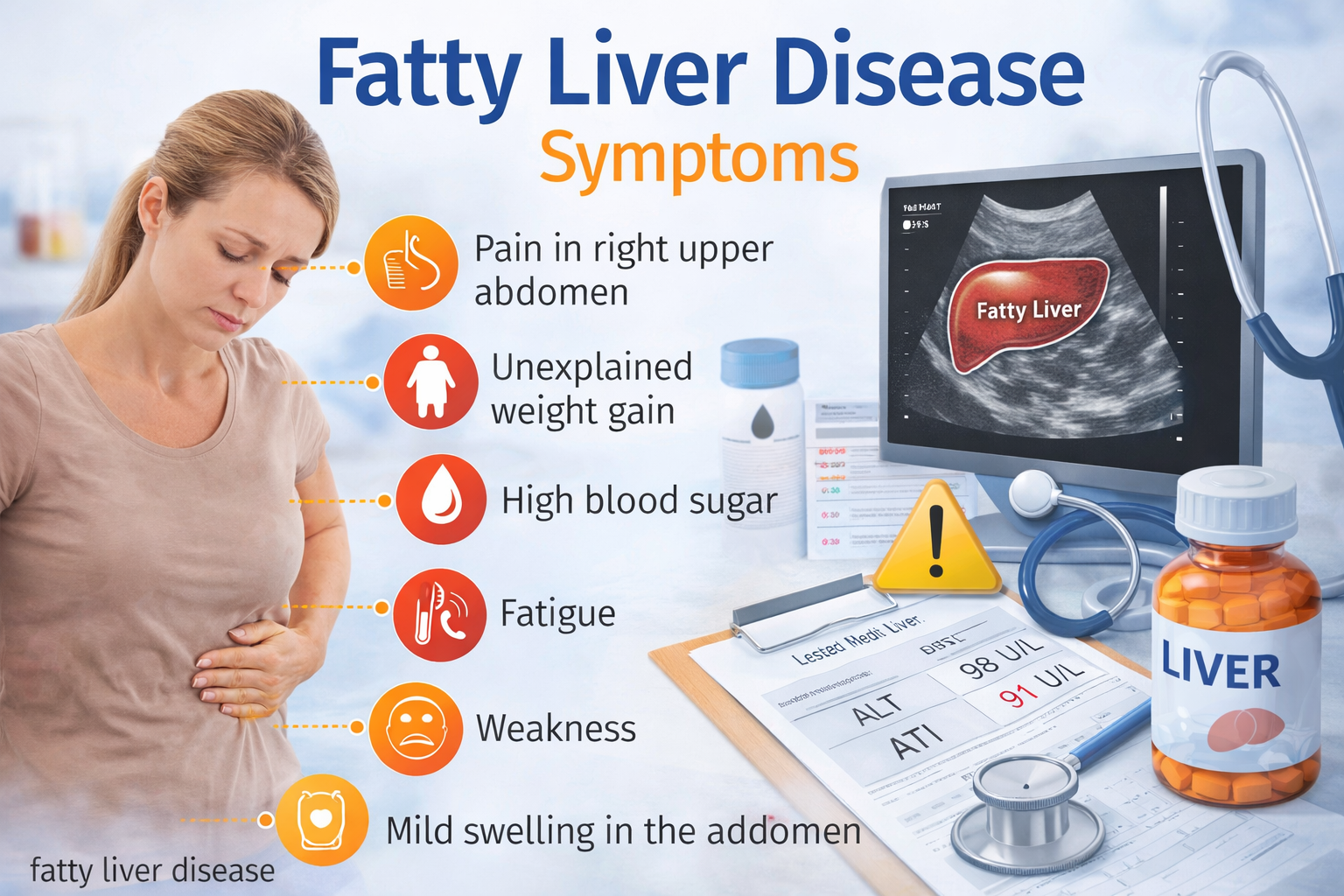
Fatty liver disease has become increasingly common due to modern lifestyle habits. Many people are diagnosed during routine health checkups and are often surprised because the condition may not show clear symptoms in the early stages.
This article explains what this liver condition is, its symptoms, causes, treatment options, and dietary changes that help manage the condition effectively.
What Is Fatty Liver Disease?
this liver condition occurs when excess fat builds up in liver cells. A small amount of fat in the liver is normal, but when fat makes up more than 5–10% of the liver’s weight, it becomes a health concern.
There are two main types:
- Non-Alcoholic Fatty Liver Disease (NAFLD)
- Alcoholic Fatty Liver Disease
Both types can lead to liver inflammation and damage if left untreated.
Common Symptoms of Fatty Liver Disease
In the early stages, this liver condition often shows no noticeable symptoms. As the condition progresses, symptoms may include:
- Persistent fatigue
- Pain or discomfort in the upper right abdomen
- Unexplained weight gain
- Loss of appetite
- Nausea
- Weakness
- Mild swelling in the abdomen
Advanced cases may cause liver inflammation or scarring.
Causes of Fatty Liver Disease
Several factors contribute to fat accumulation in the liver.
Common causes include:
- Obesity or excess body weight
- Poor diet high in sugar and refined carbs
- Insulin resistance or type 2 diabetes
- High cholesterol or triglycerides
- Excessive alcohol consumption
- Sedentary lifestyle
- Rapid weight loss
Lifestyle factors play a major role in most cases.
Who Is at Risk?
People at higher risk include:
- Individuals with obesity
- People with diabetes or prediabetes
- Adults with high cholesterol
- Those with a family history of liver disease
- People who consume alcohol regularly
Early diagnosis reduces the risk of complications.
How Is Fatty Liver Disease Diagnosed?
Doctors may diagnose this liver condition using:
- Blood tests (liver function tests)
- Ultrasound
- CT scan or MRI
- FibroScan
- In rare cases, liver biopsy
Diagnosis helps determine severity and treatment approach.
Treatment for Fatty Liver Disease
There is no single medication that cures fatty liver disease, but it can often be reversed with lifestyle changes.
Common treatment approaches:
- Weight loss through healthy diet
- Regular physical activity
- Managing blood sugar levels
- Reducing alcohol intake
- Treating underlying conditions
Medical supervision is important in advanced cases.
Best Diet Plan for Fatty Liver Disease
Diet plays a key role in managing fatty liver disease.
Foods to include:
- Leafy green vegetables
- Whole grains
- Fruits in moderation
- Lean protein (fish, eggs, legumes)
- Healthy fats (olive oil, nuts)
- Plenty of water
Foods to avoid:
- Fried foods
- Sugary snacks and drinks
- Refined carbohydrates
- Processed foods
- Excess alcohol
A balanced diet helps reduce liver fat and inflammation.
Lifestyle Changes That Support Liver Health
- Exercise at least 30 minutes daily
- Maintain a healthy weight
- Avoid smoking
- Get adequate sleep
- Manage stress levels
Consistency is more important than intensity.
Can Fatty Liver Disease Be Reversed?
Yes, in many cases fatty liver disease is reversible, especially in the early stages. With proper diet, regular exercise, and lifestyle changes, liver fat levels can return to normal.
Advanced stages require close medical monitoring.
Maintaining liver health also requires long-term consistency in daily habits. Even small improvements in diet, regular movement, and reduced sugar intake can significantly lower liver fat over time and support overall metabolic health.
Early lifestyle changes can prevent long-term liver complications.
According to the Mayo Clinic, fatty liver disease can often be reversed with healthy lifestyle changes and proper medical guidance.
Final Verdict
Fatty liver disease is common but manageable. Early detection and consistent lifestyle changes can prevent serious liver damage. Anyone experiencing symptoms or risk factors should consult a healthcare professional for evaluation and guidance.
Disclaimer:
This article is for informational purposes only and does not replace professional medical advice. Always consult a qualified healthcare provider.
Managing blood sugar is also important, so you may find our guide on insulin resistance helpful.