Blood Pressure (BP) is one of the most commonly discussed health terms today, yet many people don’t fully understand what it means until a health problem arises. In India, high blood pressure—also called hypertension—is increasing rapidly due to lifestyle changes, stress, unhealthy diet, and lack of physical activity.
High blood pressure is a common health condition that affects millions of people worldwide and often goes unnoticed until serious complications occur.
The scary part? High BP often shows no symptoms until it damages vital organs like the heart, brain, or kidneys. That’s why it is often called the “silent killer.”
In this article, we’ll explain BP in simple language—its normal range, causes, symptoms, risks, and effective natural ways to control it.
What Is Blood Pressure (BP)?
Blood pressure is the force of blood pushing against the walls of your arteries as your heart pumps blood throughout the body. It is measured using two numbers:
- Systolic BP (upper number): Pressure when the heart beats
- Diastolic BP (lower number): Pressure when the heart rests between beats
Example: 120/80 mmHg
Both numbers are important for determining your heart health.
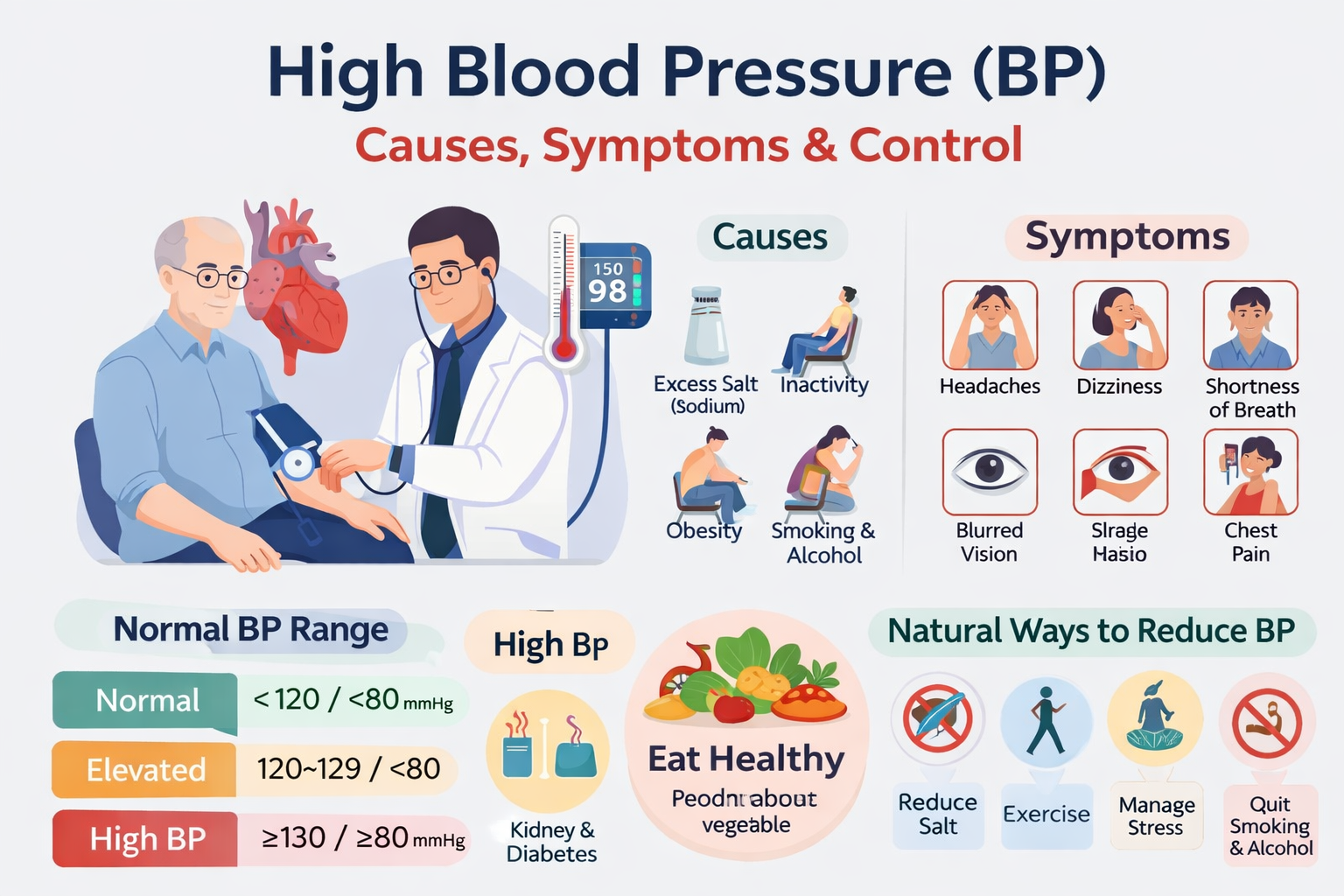
Normal Blood Pressure Range
According to health experts, BP levels are categorized as follows:
- Normal BP: Below 120/80 mmHg
- Elevated BP: 120–129 / below 80
- High BP (Stage 1): 130–139 / 80–89
- High BP (Stage 2): 140/90 or higher
If your BP readings are consistently above normal, it’s important to take action early.
Common Causes of High Blood Pressure
High BP doesn’t usually have a single cause. It develops gradually due to a combination of factors:
- Excess salt (sodium) intake
- Lack of physical activity
- Obesity or overweight
- Stress and anxiety
- Smoking and alcohol consumption
- Family history of hypertension
- Poor sleep quality
- Diabetes and kidney problems
In many cases, lifestyle habits play a major role.
Symptoms of High BP (Often Ignored)
Most people with high BP feel completely normal, which is why regular BP checks are essential. However, when BP becomes very high, some symptoms may appear:
- Headaches
- Dizziness
- Shortness of breath
- Chest pain
- Blurred vision
- Fatigue
- Nosebleeds (rare cases)
Never wait for symptoms—early detection saves lives.
Health Risks of Uncontrolled BP
If high BP is left untreated, it can lead to serious complications:
- Heart attack and heart failure
- Stroke or brain hemorrhage
- Kidney damage or kidney failure
- Vision loss
- Erectile dysfunction
- Memory problems
Controlling BP significantly reduces the risk of these life-threatening conditions.
Natural Ways to Control Blood Pressure
The good news is that BP can often be managed naturally, especially in the early stages.
1. Reduce Salt Intake
Limit salt to less than 5 grams per day. Avoid packaged foods, pickles, chips, and instant meals.
2. Eat a Heart-Healthy Diet
Include:
- Fruits and vegetables
- Whole grains
- Nuts and seeds
- Low-fat dairy
- Foods rich in potassium like bananas and coconut water
3. Exercise Regularly
Just 30 minutes of walking daily can significantly lower BP. Yoga and pranayama are also highly effective.
4. Manage Stress
Meditation, deep breathing, prayer, or spending time in nature helps lower stress hormones that raise BP.
5. Maintain Healthy Weight
Even losing 5–7% of body weight can improve BP levels.
6. Limit Alcohol and Quit Smoking
Alcohol and smoking directly increase BP and damage blood vessels.
According to the World Health Organization (WHO), high blood pressure is one of the leading risk factors for heart disease and stroke worldwide.
When Should You See a Doctor?
- If BP is consistently above 130/80 mmHg
- If you experience chest pain or severe headaches
- If you have diabetes, kidney disease, or heart problems
Doctors may recommend lifestyle changes, medication, or both depending on your condition.
Final Thoughts
High blood pressure is common—but it is not harmless. With regular monitoring, healthy habits, and timely medical advice, BP can be controlled effectively. The key is awareness and early action.
Make BP checks a routine part of your life, just like brushing your teeth. Your heart will thank you for it.
Foods to Boost Immunity Naturally for Strong Health (Daily Indian Diet)