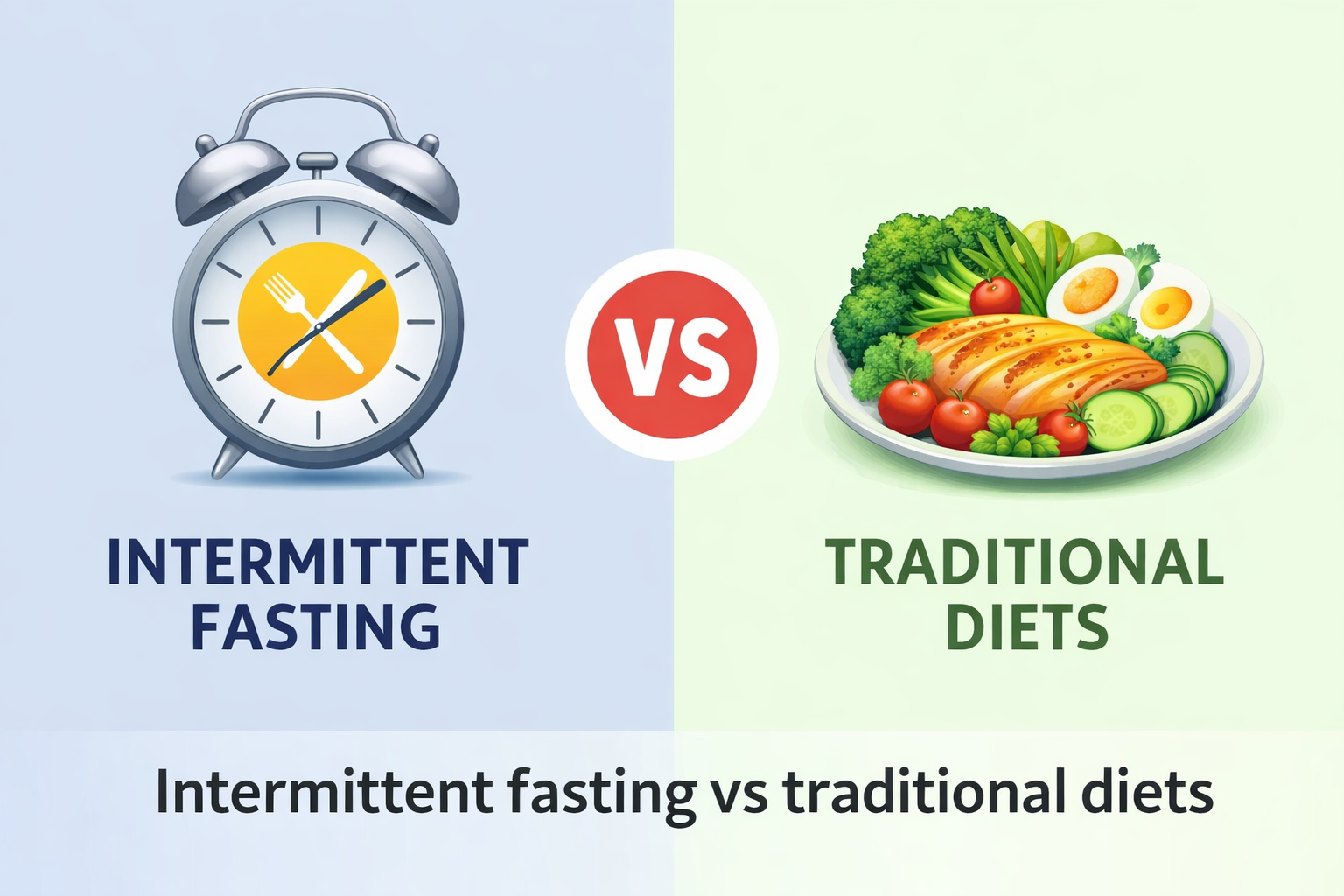
Intermittent fasting vs traditional diets is one of the most debated topics in modern nutrition. With millions searching for the best way to lose weight and improve health, choosing the right approach can feel confusing.
In the world of wellness trends, Intermittent Fasting (IF) has exploded in popularity. From celebrities to fitness enthusiasts and everyday people looking to lose weight or boost health, IF is everywhere. But how does it really stack up against traditional calorie-controlled diets? Today we break it down in simple, evidence-based language so you can decide which approach might be right for you.
Intermittent Fasting vs Traditional Diets: Key Differences Explained
Intermittent fasting isn’t so much about what you eat, but when you eat. Instead of three meals and snacks throughout the day, you cycle between periods of eating and fasting. Popular methods include:
- 16:8 — Fast for 16 hours, eat during an 8-hour window
- 5:2 — Eat normally for 5 days, restrict calories for 2 non-consecutive days
- Eat-Stop-Eat — 24-hour fast once or twice a week
The theory? Giving your body longer breaks from eating helps regulate insulin, improve fat metabolism, and may trigger cellular repair processes.
Traditional Diets: A Quick Recap
When most people think “diet,” they imagine a focus on what they eat: counting calories, tracking macros, eating low-fat or low-carb, etc. Traditional diets emphasize daily caloric restriction and balanced meals to create a calorie deficit, which typically leads to weight loss.
When comparing intermittent fasting vs traditional diets, the biggest difference lies in how meals are timed rather than the foods themselves.
How Do They Compare for Weight Loss?
One of the biggest reasons people choose IF is for weight loss — and many studies show it can be effective. Research suggests that when practiced consistently, IF results in a calorie deficit similar to traditional dieting. Some people also find that limiting eating windows naturally reduces snacking and overall calories.
However, weight loss ultimately comes down to calories in vs. calories out. Whether you do IF or a balanced calorie-controlled diet, if you consume more calories than your body needs, weight loss will be slow or nonexistent.
➡️ Bottom line: Both strategies can work for weight loss, but individual preference and lifestyle play a huge role in sticking with it.
Health Benefits Beyond Weight Loss
Intermittent fasting may offer benefits beyond shedding pounds:
✔️ Improved insulin sensitivity — Some studies show better blood sugar control in people practicing IF.
✔️ Autophagy activation — Fasting may help trigger cellular cleaning processes that support longevity.
✔️ Reduced inflammation — Early research suggests fasting can reduce inflammatory markers.
Traditional diets focused on whole foods also bring major health benefits:
🌿 nutrient-dense eating
❤️ heart health improvements
🧠 better mood and energy levels when you avoid processed foods
Which One Is Easier to Stick With?
One major factor determining success is adherence — how likely you are to stick with the plan long-term.
Many people find IF more flexible because it doesn’t require daily calorie counting. Others struggle with fasting, especially early on, or feel restricted during social meals, breakfasts, or family dinners.
Traditional diets may feel more structured and familiar, but calorie counting can feel tedious over time.
Potential Downsides
Before choosing any plan, consider possible drawbacks:
🔹 Intermittent Fasting
- May cause headaches, hunger, irritability in the beginning
- Not suitable for people with history of eating disorders
- Might impact energy for workouts if timing meals poorly
🔹 Traditional Diets
- Can lead to obsession over numbers
- May be less flexible socially
- Some plans cut out entire food groups (not ideal)
Who Should Avoid Fasting?
Intermittent fasting is not recommended for:
❌ pregnant or breastfeeding women
❌ people with diabetes on medication
❌ those with a history of disordered eating
❌ children and teens
Always consult a healthcare provider before starting any eating plan.
Tips for Success
Here are simple ways to succeed — no matter which approach you choose:
⭐ Stay hydrated — water, herbal tea, and black coffee count!
⭐ Focus on whole foods like veggies, lean proteins, healthy fats.
⭐ Listen to your body — hunger is normal, but dizziness or fatigue isn’t.
⭐ Stay consistent — results take time, not a day.
Several nutrition studies and expert guidelines support both approaches. According to research shared by Healthline, intermittent fasting may help improve insulin sensitivity and metabolic health, while balanced traditional diets recommended by the World Health Organization (WHO) focus on long-term nutritional adequacy and heart health.
Also read our blog https://myhealthtips.info/indian-vegetarian-diet-plan-for-busy-it-professionals/
Final Verdict
There’s no definitive “one size fits all.” If you enjoy structure and simplicity, intermittent fasting may help you stay consistent with fewer decisions. If you prefer a more traditional approach focused on balanced meals every day, a calorie-controlled diet may be easier to maintain.
Regardless of the path you choose, remember: long-term habits beat quick fixes.
Ultimately, the debate of intermittent fasting vs traditional diets comes down to lifestyle, consistency, and long-term sustainability.